

Nepal’s food processing sector is experiencing rapid growth, driven by urbanization, rising disposable incomes, changing consumer preferences, and increasing demand for convenient, ready-to-eat meat products. Among these, sausages have emerged as a popular choice, appealing to both urban consumers in Kathmandu, Pokhara, and Butwal, and the expanding hospitality and retail sectors. The processed meat market, including sausages, is expanding steadily, with annual industry value estimates reaching significant figures due to higher consumption of items like chicken sausages, beef/pork varieties, and flavored options.
Sausage making machines play a central role in this transformation. These specialized pieces of equipment enable efficient, hygienic, and consistent production of sausages at various scales—from small butcher shops and home-based enterprises to medium and large commercial operations. For entrepreneurs and established businesses in Nepal looking to enter or scale sausage production, investing in reliable sausage making machines is essential for quality control, productivity, and compliance with food safety standards.
What Is a Sausage Making Machine?
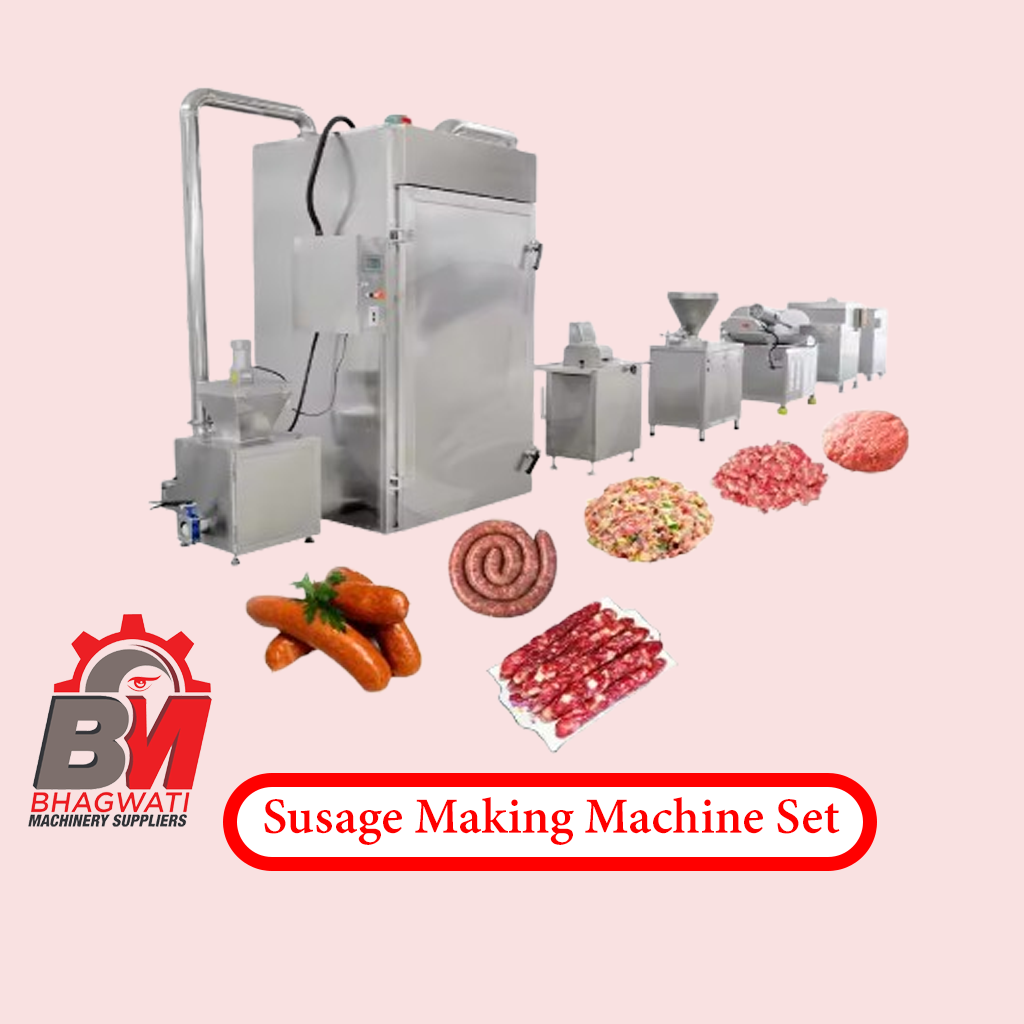
A sausage making machine, often referred to as a sausage stuffer, filler, or complete sausage production line equipment, is designed to grind, mix, emulsify, and fill meat mixtures into casings to create uniform sausages. Modern commercial versions integrate multiple functions to streamline the entire process.
The core component is the sausage stuffer/filler, which pushes the seasoned meat emulsion into natural or synthetic casings under controlled pressure. Advanced models include vacuum systems to remove air bubbles, ensuring denser, longer-shelf-life products without oxidation.
Supporting machines in a typical sausage production setup include:
- Meat grinders/mincers (keema machines) for initial grinding of raw meat.
- Bowl choppers or mixers for emulsifying fat, spices, and additives into a smooth paste.
- Sausage linking, tying, or clipping machines for portioning and sealing.
- Smoking chambers for flavored or preserved varieties.
In Nepal, where buffalo, chicken, goat, and pork are common raw materials, these machines help produce local favorites like chicken sausages, spicy Nepali-style sausages, or Western-inspired varieties for hotels and supermarkets.
Types of Sausage Making Machines Available in Nepal
Sausage making machines come in various types to suit different production scales and budgets:
- Manual Sausage Stuffers These are affordable, hand-operated or pedal-driven fillers with capacities from 5–15 liters. Ideal for small-scale butchers, restaurants, or startups in rural areas. They require physical effort but offer precise control and low initial investment.
- Electric Sausage Stuffers Semi-automatic electric models (10–30 liters or more) use motors for faster filling. Features like pedal control, multiple stuffing tubes (for different diameters), and stainless steel construction make them popular for mid-sized operations in urban Nepal.
- Hydraulic or Pneumatic Sausage Fillers High-capacity commercial machines (50–200+ kg/hour) use hydraulic pressure or vacuum-pneumatic systems for consistent, bubble-free filling. Vacuum models are preferred for premium sausages as they extend shelf life by minimizing air exposure.
- Fully Automatic Sausage Production Lines These integrate grinding, mixing, filling, linking, and sometimes smoking. Suited for large processors supplying supermarkets or exports. They boost output dramatically while maintaining hygiene.
Most machines in Nepal are imported from India, China, or Europe, featuring food-grade stainless steel (SS304/316) for durability, easy cleaning, and compliance with hygiene norms.
Benefits of Using Sausage Making Machines in Nepal
Adopting modern sausage making machines offers multiple advantages tailored to Nepal’s market:
- Increased Efficiency and Output — Manual processes limit production to a few dozen kg per day; machines can handle 100–500+ kg/hour, meeting demand from hotels, fast-food chains, and retail.
- Consistent Quality — Uniform size, weight, and texture improve customer satisfaction and brand reputation.
- Hygiene and Food Safety — Stainless steel designs reduce contamination risks, crucial for Nepal’s growing export ambitions and local regulations.
- Cost Savings — Reduced labor, minimal waste, and lower energy use compared to outdated methods.
- Product Diversification — Produce fresh, smoked, dry, or emulsified sausages (e.g., hot dogs, chorizo-style) to target diverse consumers.
- Scalability — Start small and upgrade as business grows, supporting Nepal’s “Make in Nepal” and entrepreneurship initiatives.
In a market where processed meat demand is rising due to busy lifestyles and tourism recovery, these machines help businesses stay competitive.
Applications in Nepal’s Context
Sausage production is gaining traction in:
- Urban Food Processing Units — Kathmandu Valley and Pokhara see high demand for ready-to-cook sausages in supermarkets and restaurants.
- Butcher Shops and Small Enterprises — Many butchers add value by producing flavored sausages.
- Hospitality Sector — Hotels and catering services require bulk supplies.
- Export-Oriented Businesses — With proper certification, sausages can target regional markets.
Machines handle various meats, spices (local chili, cumin, turmeric blends), and casings, allowing customization to Nepali tastes.
Key Features to Consider When Buying
When selecting a sausage making machine in Nepal, prioritize:
- Capacity matching your needs (kg/hour or liter hopper).
- Material quality (full stainless steel).
- Power source (single/three-phase, compatible with Nepal’s electricity).
- Ease of cleaning and maintenance.
- Additional functions (vacuum, twisting, adjustable speed).
- After-sales support, warranty, and spare parts availability.
Leading Supplier: Bhagwati Machinery Suppliers in Nepal
For reliable sausage making machines and related meat processing equipment in Nepal, Bhagwati Machinery Suppliers Pvt Ltd stands out as a trusted provider. Located in Butwal-12, Dhabaha, Milanpath, Lumbini Province, they specialize in importing high-quality food processing machinery from India and other sources, including meat mincers, mixers, stuffers, and complete lines suitable for sausage production.
They offer consultation to match machines to your budget and scale, plus installation, operator training, and ongoing support. Their expertise in food industry equipment makes them ideal for Nepalese entrepreneurs entering sausage making.
Explore their offerings:
- Website: https://bhagwatimachinerysuppliers.com.np/
- Hamro Bazar: https://hamrobazaar.com/profile
- YouTube: https://www.youtube.com/@bhagwatimachinery/videos (watch equipment demos)
- TikTok: https://www.tiktok.com/@bhagwatimachinery
- Facebook Page: https://www.facebook.com/bhagwatimachinerysupplers/
- Google Map: https://share.google/44AlK82L2WhVETQET
- LinkedIn: https://www.linkedin.com/company/70478546/admin/dashboard/
Contact them directly at 9763651530 for quotes, customization, or site visits.
Installation, Maintenance, and ROI Tips
Professional installation ensures optimal performance and safety. Regular maintenance—cleaning after use, lubricating parts, checking seals—extends machine life to 10+ years. Many users report ROI within 1–2 years through higher sales and reduced labor costs.
Conclusion
As Nepal’s meat processing and sausage industry continues to grow, sausage making machines represent a smart investment for efficiency, quality, and profitability. Whether starting small or scaling up, the right equipment empowers businesses to meet rising demand while maintaining standards.
Contact Bhagwati Machinery Suppliers at 9763651530 or visit https://bhagwatimachinerysuppliers.com.np/ to discuss solutions tailored for your sausage production needs in Nepal.

Reviews
There are no reviews yet.