

The textile industry in Nepal has been growing steadily over the years, driven by both domestic demand and export opportunities. However, one of the major challenges in the textile sector is the management of waste cotton generated during manufacturing processes, including spinning, weaving, cutting, and garment production. The accumulation of cotton waste not only leads to material losses but also poses environmental concerns. To address this challenge, waste cotton recycle machines have emerged as essential equipment for sustainable textile operations in Nepal.
Bhagwati Machinery Suppliers Pvt Ltd, a leading supplier of industrial machinery in Nepal, provides high-quality waste cotton recycling solutions that enable textile businesses to minimize waste, reduce production costs, and contribute to eco-friendly practices.
What is a Waste Cotton Recycle Machine?
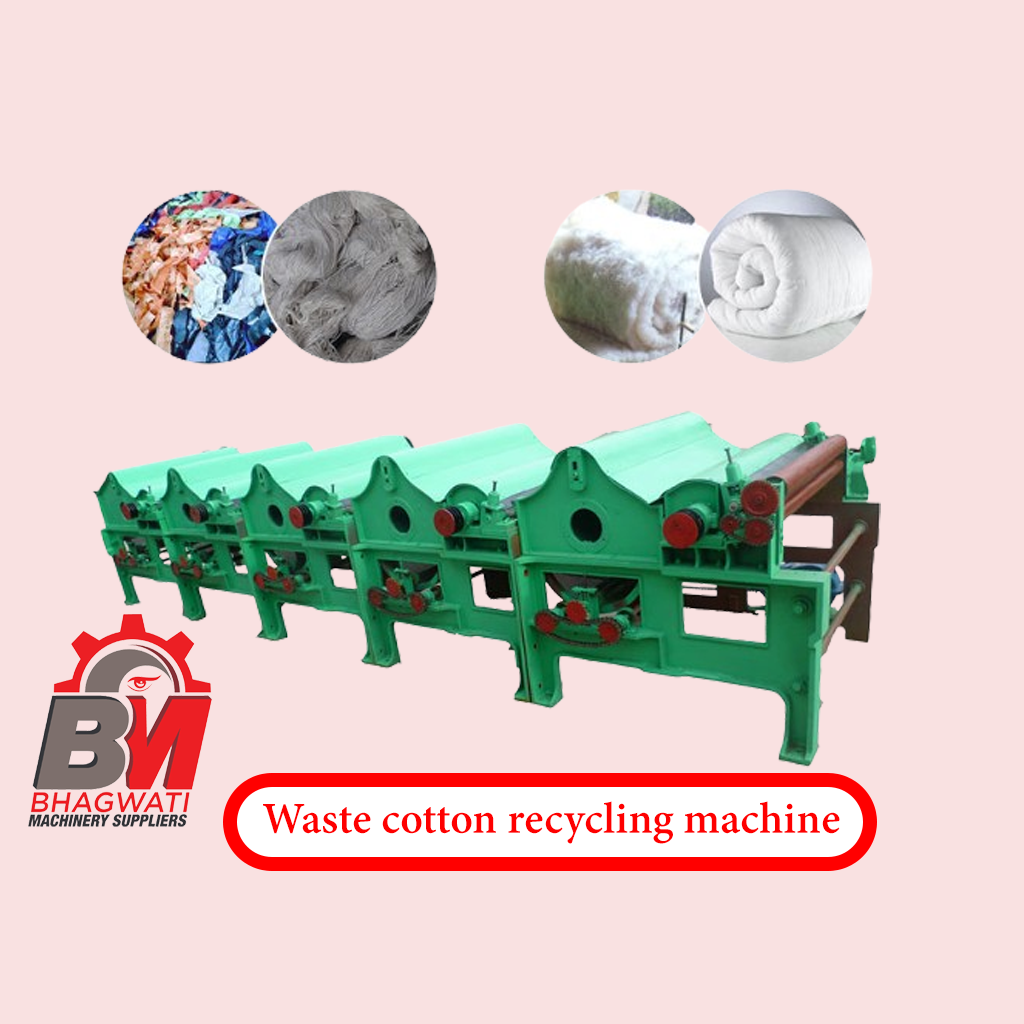
A waste cotton recycle machine is an industrial device designed to process cotton waste into reusable fibers. The machine efficiently opens, cleans, and blends discarded cotton, transforming it into a form that can be reused in spinning, padding, filling, or manufacturing non-woven products.
Key Features:
-
Fiber Opening & Cleaning: Separates cotton fibers from impurities such as threads, dust, or synthetic material.
-
Blending & Carding: Aligns fibers uniformly to prepare them for reuse in production.
-
Adjustable Production Capacity: Machines can handle small, medium, or large-scale textile operations.
-
Durable Construction: Made with robust materials suitable for industrial use.
-
Energy Efficient: Designed to save power while maintaining high output.
By converting waste cotton into reusable fibers, these machines help reduce raw material costs and environmental impact while supporting sustainable textile practices.
Importance of Waste Cotton Recycling in Nepal
The textile industry generates a significant amount of cotton waste during various stages of production. Without proper recycling, this waste is often discarded, creating both economic and environmental problems.
Benefits of Recycling Waste Cotton:
-
Cost Savings: Recycled cotton reduces dependency on raw cotton, which is often expensive.
-
Environmental Sustainability: Recycling cotton waste reduces landfill disposal, decreases carbon footprint, and supports eco-friendly manufacturing.
-
Resource Optimization: Allows manufacturers to make the most of every fiber, reducing material losses.
-
Support for Non-Woven Products: Recycled cotton can be used to produce mattresses, pillows, insulation materials, and cleaning wipes.
-
Enhanced Business Reputation: Companies adopting sustainable practices improve their brand image and appeal to eco-conscious consumers.
In Nepal, where the textile and garment sector is expanding in cities like Kathmandu, Pokhara, and Butwal, waste cotton recycling is becoming increasingly crucial for competitive and responsible business operations.
How Waste Cotton Recycle Machines Work
Waste cotton recycle machines use a series of mechanical processes to convert discarded fibers into reusable material:
-
Feeding: Waste cotton is loaded into the machine via a hopper or feeding system.
-
Opening & Cleaning: Specialized rollers and beaters separate fibers and remove contaminants such as synthetic threads, dust, and debris.
-
Blending: Different types of cotton waste can be mixed to achieve uniform quality.
-
Carding: Fibers are aligned and fluffed, creating a continuous web of cleaned cotton suitable for spinning or other applications.
-
Output: The recycled cotton is collected in rolls or bales, ready for reuse in production processes.
Modern machines often come with automation features, allowing adjustable speed, fiber density control, and consistent quality output for industrial-scale operations.
Applications of Waste Cotton Recycle Machines in Nepal
Waste cotton recycle machines have versatile applications across the textile and related industries:
-
Spinning Mills: Recycled fibers can be re-spun into yarn, reducing raw cotton costs.
-
Garment Manufacturing Units: Waste cotton from cutting and stitching can be reused in padding or low-grade fabric production.
-
Non-Woven Product Manufacturing: Mattresses, pillows, insulation, and cleaning materials can utilize recycled cotton.
-
Craft & Handicraft Industry: Local artisans can use recycled fibers for stuffed toys, quilts, and decorative items.
By integrating these machines into production workflows, Nepalese businesses can achieve cost efficiency, higher productivity, and environmental compliance.
Features to Consider When Buying a Waste Cotton Recycle Machine
When sourcing a machine in Nepal, businesses should evaluate:
-
Capacity: Daily or hourly processing capability based on production needs.
-
Fiber Quality: Ability to handle different grades of cotton waste and produce consistent fibers.
-
Build Material: Industrial-grade steel and food-safe coatings to ensure durability and hygiene.
-
Automation: Adjustable speed, blending control, and safety features.
-
Maintenance & Spare Parts: Easy access to parts and local service support.
Choosing a high-quality supplier ensures long-term machine performance and reliable after-sales support.
Why Choose Bhagwati Machinery Suppliers Pvt Ltd
Bhagwati Machinery Suppliers Pvt Ltd, located in Butwal-12, Dhabaha, Milanpath, Lumbini Province, is a trusted supplier of waste cotton recycle machines in Nepal. They specialize in importing industrial machinery from India and other countries to meet Nepalese industry needs.
Advantages of Buying from Bhagwati Machinery:
-
Wide Range of Machines: Small, medium, and large-scale recycling solutions.
-
Professional Consultation: Expert guidance on machine selection based on business size and objectives.
-
Installation & Training: Ensures smooth operation and operator efficiency.
-
After-Sales Support: Nationwide service, spare parts, and technical assistance.
-
Quality Assurance: Machines built for durability, energy efficiency, and consistent fiber quality.
Contact Details
For inquiries, quotes, or consultation:
-
Phone / WhatsApp: 9763651530
-
Hamro Bazar: https://hamrobazaar.com/profile
-
Facebook Page: https://www.facebook.com/bhagwatimachinerysupplers/
-
Google Map: https://share.google/44AlK82L2WhVETQET
-
LinkedIn: https://www.linkedin.com/company/70478546/admin/dashboard/
Installation & Maintenance Tips
-
Professional Installation: Ensures level mounting, proper electrical setup, and safety compliance.
-
Regular Cleaning: Prevents fiber blockages and contamination.
-
Lubrication: Keeps moving parts functioning smoothly.
-
Inspection: Regularly check belts, rollers, and beaters for wear.
-
Operator Training: Staff should be trained to optimize machine performance.
With proper care, waste cotton recycle machines can last 10–15 years, delivering excellent ROI through raw material savings and increased production efficiency.
Conclusion
Waste cotton recycling is no longer optional; it’s a sustainable necessity for Nepalese textile and garment businesses. Integrating a waste cotton recycle machine reduces material waste, lowers costs, and supports eco-friendly practices.
For businesses looking for reliable, high-quality recycling solutions in Nepal, Bhagwati Machinery Suppliers Pvt Ltd is the ideal partner. Their machines, professional support, and nationwide service ensure that your textile operations remain efficient, sustainable, and profitable.
Contact 9763651530 or visit https://bhagwatimachinerysuppliers.com.np/ today to start recycling waste cotton efficiently in your business.

Reviews
There are no reviews yet.